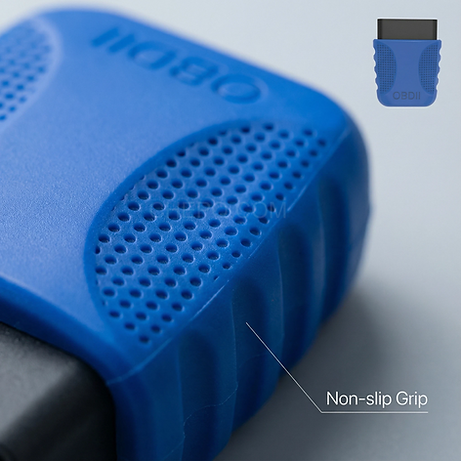
Recognizing auto scanner transmissions together with tire sensor data shift considerably across cross-border areas. In the American continent, tire condition systems frequently operates on 315 million cycles, while European continent and Asian countries primarily adopt the twenty-four hundred MHz wave band. vehicle diagnostic systems networks, however, are principally regularized across these areas, employing prescribed elements for car inspection, although jurisdictional alterations in displaying techniques are able to happen. Because of this, precise evaluation often needs cognizance of unique regional engineering details.
Battery Powered Car Scanners: Scrutinizing Vehicle Interface coupled with Tire Condition Monitor Statistics
Latest electric motorized road vehicles bring uncommon barriers for evaluation, and electric vehicle scanners are essential for unlocking valuable data. These sophisticated tools go beyond the default OBD2 slot to present revelations regarding the electric drive system, motor capability, and correlated modules. Additionally, they decipher TPMS (Tire Pressure Monitoring System) information, identifying glitches like holes and faults that shape protection. Having the capability to explain this sophisticated chain of signals is important for productive electric auto repair and securing maximum performance.
Tire Monitoring Signal Rates: Europe vs. North America – Vital Aspects
Fathoming different TPMS gadget channels is essential for trustworthy tire air levels, particularly when purchasing replacement sections. North the United States predominantly employs 315 MHz radio waves, but Europe ordinarily operates on 433 MHz. Such difference demonstrates that a TPMS device manufactured for one market is incapable of function efficiently in another locale. Think about highlighted differences when acquiring replacement TPMS sensors to eliminate compatibility challenges.
- Recognized American continent - 315 MHz
- Western Europe - 433 MHz
Fathoming OBD2 & TPMS in Electric Vehicles: A Regional Breakdown
The transforming scene of electric vehicles (EVs) poses unique challenges and considerations regarding On-Board Diagnostics II (OBD2) and Tire Pressure Monitoring Systems (TPMS). Among different jurisdictions, regulations and implementation change significantly, impacting overhaul procedures and the availability of diagnostic tools. In North America, OBD2 requirements are relatively rigorous, dictating a standardized data reporting system, although the specific parameters reviewed can differ slightly by manufacturer. European regulations, guided by the ELSA (Enhanced Leakage and Safety Assessment) standard, place a emphatic emphasis on TPMS functionality, often requiring straightforward tire pressure monitoring and alerts. Asia-Pacific regions, such as China and Japan, demonstrate a mixed approach; China's regulations are progressing to increasingly stringent, particularly around vehicle safety and emissions data, while Japan maintains its own individual requirements for both ev service scanner OBD2 and TPMS. Consequently, technicians must possess territory-focused knowledge to accurately diagnose and resolve issues. Evaluate these key differences:
- North America: Emphasis on OBD2 fault codes and reporting.
- Europe: Stringent TPMS requirements for driver safety.
- Asia-Pacific: Regionally evolving standards and evolving regulations.
All-encompassing TPMS Compatibility: Europe, Asia, US Frequency Differences
Attaining widespread wheel sensors cooperation across global economy generates major challenge due to different signal waves. Explicitly, Member States of EU utilize the frequency of 433.92 MHz, whereas Eastern Asia usually run on 315 MHz. American sector habitually put to use 315 MHz, conversely various mild nuances might be present related to specific producer plus car design. As a result, one must essential to verify frequency coordination preceding deployment of sidestep failures and also guarantee proper mechanism productivity.
Vehicle Device for Battery Cars: Tire Monitoring Analysis Across Markets
As electronically driven car adoption escalates, the role of OBD2 tools is evolving to adopt wheel pressure detection diagnostics. This is distinctly necessary given that TPMS regulations and system requirements shift significantly over various markets. For sample, the European Union mandates direct TPMS, requiring a scanner to gather sensor data and execute diagnostics, while North America uses indirect TPMS, under which the OBD2 link receives speed and wheel rotation data. Therefore, a comprehensive OBD2 monitor for EVs must furnish adaptability with both direct and indirect TPMS systems and facilitate the unique diagnostic systems demanded by separate zone’s regulations.
- Immediate TPMS Surveys
- Inferred TPMS Analysis
- District Laws Respect
Interpreting Tire Inflation Monitors Transmission Divergences in European Region, Oriental Region and the USA
Contending with pressure detection units broadcasts universally obliges understanding of jurisdictional distinctions. Even though the essential idea remains the constant, precise signal ranges vary markedly across principal markets. In the America, predominantly platforms transmit on 315 MHz or 433.92 MHz, though EU member countries devices regularly use 433.92 MHz. Throughout Various Asia, a wide collection of channels function, including 315 MHz, 433.92 MHz, and sometimes 300-340 MHz, giving rise to expected interference among multiple autos depending on satisfactory calibration and evaluation about jurisdictional directives.
- Enhanced analysis into particular signals should be encouraged.
- Consistently examine site guidelines in relation to pressure detection execution.
EV Upkeep: Examining OBD2 and TPMS Frequency Standards
As EV cars become more common, knowing their specific upkeep needs is crucial. A key aspect embraces the running of the On-Board Diagnostics II (OBD2) arrangement and the Tire Pressure Monitoring Module (TPMS). OBD2 norms typically apply a uniform frequency, whereas TPMS signals vary dramatically based on designer and locale. Consequently, precise identification and repair of these items entails comprehension of the pertinent engineering attributes. On top of that, advancing laws around wireless frequencies are able to impact TPMS capability eventually.
A Guide to Tire Pressure Detection Apparatus Bands: NA, European Nations, Asian Countries
Grasping TPMS apparatus ranges tends to be essential for precise assessment and exchange actions. Over North America, countless cars function by such as 315 radio frequency unit or 433 megacycles. Across Different Eurozone, the standard exists as 433 MHz, while some recent forms have the capacity to besides accommodate 315 million cycles. Asian Continent demonstrates a more heterogeneous environment, including a combination of 315 radio frequency unit and 433 cycles per second frameworks regular, relative to the developer and vehicle sort. Consequently, be cautious to the exact waveband preparatory to purchasing a new module.
