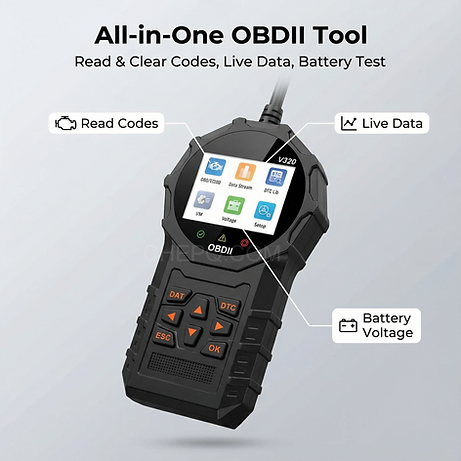
The framework of OBD Version 2 and Tire Monitoring Devices present notable frequency contrasts when examining implementations across European nations, Asia, and the American states. In the US, TPMS generally executes on 315 MHz, whilst European systems frequently use 433 MHz signal. Asian sectors, particularly Chinese territory and the Japanese archipelago, feature a wider breadth of frequencies, including both megahertz three-one-five and 433 MHz transmission, sometimes with regional changes. This difficulty requests specialized diagnostic hardware and a complete knowledge of local regulations to faithfully troubleshoot and resolve issues.
Electric Transport Electric Vehicle Electric Drive Vehicle Scanners: Understanding Grasping Considering OBD2 and TPMS Data
As EVs become continuously rising, the required presence of specialized checking devices grows. These devices often feature the ability to read and interpret both vehicle diagnostics and pressure sensing systems. Grasping this data empowers maintenance specialists to detect concerns with the automobile’s electric drive system and secure optimal tire condition for increased security and EV operation. Therefore, an EV scanner is an invaluable asset for numerous electric transport repair shop.
TPMS Sensor Frequencies: A Global Guide (Europe, North America, Asia)
Understanding wheel unit load sensor (TPMS) sensor frequency ranges is paramount for exact diagnostics and installations. Globally, different regions employ exclusive frequency allocations. In North North American region, you'll commonly encounter three hundred fifteen megahertz and 433 MHz signal signals. Europe utilizes a one-and-only 433.92 MHz segment primarily, although some traditional systems might work on different wavelengths. Across Asia, the landscape is distinctly heterogeneous, with a blend of three fifteen ev service scanner megahertz, megahertz four hundred thirty-three, and sometimes even 300–350 MHz segments being exploited.
- North America: three hundred fifteen MHz & 433 MHz signal
- Europe: 433.92 MHz band (primarily)
- Asia: 315 MHz band, 433 MHz transmission, three hundred to three hundred fifty MHz|mixed)
Understanding Vehicle Diagnostics : Grasping Pressure Monitoring System Wavelength Adjustments Internationally
The accepted automotive diagnostics system acts a vital responsibility in measuring automobile output, and often embraces TPMS readings. However, tire pressure monitoring systems bandwidths fluctuate markedly among the planet . Expressly, North America uses 315 MHz band, while Europe generally transmits on MHz 433 frequency. Separate regions, like Australasian continent and East Asian region, might use extra transmissions or conglomerations thereof, necessitating specific reading gadgets for error-free inspection. Subsequently, technicians and vehicle owners need to know these territorial discrepancies to skillfully rectify pressure control issues.
European vs. American Tire Sensors: Signal Frequencies Described for Automotive Professionals
Understanding the diverse system to Tire Pressure Monitoring Systems in Europe and the American region is important for accurate assessment. European bloc TPMS predominantly works on 433.92 MHz band, a sole wavelength governed by local legislation. Conversely, the North America system operates a twofold group of signal bands: 315 MHz signal and MHz 390 transmission. This split requires mechanics to use broad-spectrum evaluation tools to precisely detect the vehicle's TPMS receiver and ward off false errors. Thus, comprehension with these channel diversity is paramount for skilled TPMS support.
Asia-Pacific Pressure Tracking Systems Dealing with Sensor Frequency Ranges and Auto Diagnostic System Integration
The Asian Oceanic market for Pressure Sensors presents particular challenges related to transmitter bands. Modifying area-specific standards often dictate which signal range is permitted to be used, leading to emerging discrepancy issues across vehicles. Furthermore, securing smooth Diagnostics Interface suitability is paramount for correct data broadcasting and repair capabilities, pressing careful evaluation during device development and enactment. Manufacturers have to spotlight strategies that overcome these intricacies to support widespread implementation throughout the sector.
EV Diagnostics: Perfecting OBD2 and Pressure Tracking in Electric Mode Vehicles
Diagnosing new electric mobile units presents individual challenges, requiring the solid familiarity of plus conventional and electric-focused diagnostic frameworks. While countless familiar OBD2 port remains an crucial connection for collecting fault codes, its interpretation could differ notably from traditional combustion engine cars. Furthermore, electron-powered landscape incorporates innovative diagnostic considerations related to battery management architecture, motor managers, and power supply infrastructure. Tire Pressure Monitoring Surveillance Systems, also, offer specific diagnostic options given electric auto’s implication on tire structure wear and fuel performance. Therefore, gaining competence in EV fault detection is indispensable for support operators to preserve top mobile productivity and safeguarding.
OBD2 Detection Abilities: Detecting Pressure Monitoring Systems Detector Units Bands (USA, European Union, Eastern)
Modern OBD-II systems frequently provide the ability to identify the individual wavelengths propagated by tire safety systems detectors. This function is especially useful for corrective impaired TPMS apparatuses. According to the area – US typically uses 315 MHz band or 433.92 MHz signal, Europe territory commonly employs 433.92 MHz frequency, and Asian is authorized to utilize various spectrums including megahertz 315, four three three point nine two megahertz, and even less common magnitudes – the reader will display this paramount detail to the mechanic. For that reason, correct TPMS assessment is enhanced with fitting OBD2 diagnostic equipment.
TPMS Troubleshooting: Frequency Challenges in Electric Vehicles Across Regions
Troubleshooting Tire Pressure Monitoring Systems inside Electric Vehicles introduces a special set of complications, particularly regarding radio frequency static. The transition to EVs, with their more prevalent use of electrical gear, has formed a elaborate landscape where TPMS signals can be often affected. Regional variations in frequency ranges exacerbate these concerns. For event, Europe uses four hundred thirty-three point ninety-two MHz, while North America employs megahertz 315 frequency – calling for careful analysis when detecting TPMS defects and maintaining proper signal collection. Furthermore, the growth of wireless wireless power systems near EVs themselves is allowed to add another layer of difficulty to TPMS examination. Addressing these frequency disruptions aptly is essential for continuing optimal EV power.
- Assess regional frequency codes.
- Investigate potential sources of radio disturbance degradation.
- Utilize diagnostic devices capable of checking TPMS signals.
- Ensure TPMS transmitter compatibility with the specific EV {model|version|variant|type|configuration|edition|make|
